

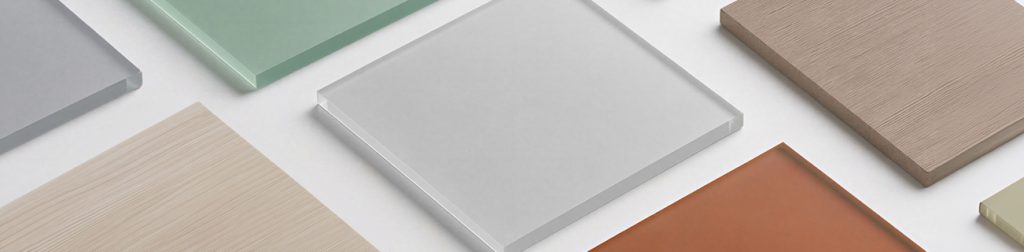

Ultra-matte finishes are showing up everywhere — cabinetry, flooring, consumer electronics, automotive interiors, and more. But not all matte finishes are created equal. Traditional matting agents can reduce clarity, attract dirt, and compromise durability over time. Excimer UV curing takes a different approach by modifying the coating surface itself rather than relying heavily on additive loading.
To better understand what happens at the surface — and why manufacturers are paying attention — we sat down with Tony Kingera, Sr. Director of Research and Development, Performance Surfaces, at RDC Coatings. Kingera’s team develops custom Excimer UV-curable formulations for the North American market.
Q: What are Excimer UV curable coatings, and how do they differ from the matte coatings people already know?
Common “matte” coatings use silica particles and other fillers that scatter light and knock down the gloss. That works, but it comes with tradeoffs. You lose clarity, you can pick up dirt more easily, and durability sometimes suffers.
Excimer works differently. It uses a specialized ultraviolet (UV) light source — typically around 172 nanometers (nm) — to modify only the surface of the coating by creating a highly crosslinked micro-texture. That microstructure scatters light and creates the ultra-matte appearance. In other words, the low gloss is driven primarily by surface geometry rather than by high levels of particles suspended in the film. That distinction becomes important once the finish is tested for clarity, durability, and feel.
Q: How low can gloss actually go with this process?
Properly designed Excimer systems can reach very low gloss levels, often below 5 gloss units at 60 degrees, with some systems achieving even lower values depending on formulation, substrate, and process conditions. That level of gloss reduction is difficult to achieve with conventional matting agents without compromising clarity, durability, or feel. Because Excimer does not rely primarily on matting-agent loading to create the matte finish, many of those tradeoffs can be reduced.
Q: RDC formulates “zero gloss, anti-glare, soft touch” Excimer coatings. Where does that soft-touch quality actually come from?
The micro-textured surface is a major contributor. The same structure that scatters light and reduces gloss also changes how the surface feels to the hand, helping create a smoother, more velvety tactile response. Formulation choices and surface chemistry also play an important role in the final soft-touch effect.
When the formulation and cure conditions are properly balanced, appearance and tactile feel work together. That is one reason this type of finish is in high demand for premium furniture and cabinetry applications. End customers respond to both the look and the feel, even if they may not always describe the technical reason behind it.
Q: Is anti-fingerprint performance simply a byproduct of the matte finish, or something you’re actively engineering the coating to create?
Both. The micro-structured surface diffuses reflected light and can reduce the visual contrast that skin oils normally create on a glossy or semi-gloss surface. That gives the coating a useful anti-fingerprint advantage, especially when paired with the right surface chemistry.
We also tune surface energy and functionalize the coating during formulation, which allows us to improve fingerprint resistance further depending on the application. That is a major reason this technology has gained traction in electronics — phones, touch-responsive devices, and other products where visible fingerprints are a real product complaint, not just a cosmetic detail.
Q: Durability is usually the top concern with any matte finish. How do Excimer coatings hold up?
When properly formulated and cured, Excimer coatings can deliver strong scratch, mar, stain, chemical, and burnish resistance, often outperforming additive-heavy matte systems in targeted applications. The high degree of crosslinking at the surface is one reason these systems can perform so well compared with conventional matte coatings.
Well-designed Excimer coatings can stand up to household chemicals, staining, abrasion, and burnishing. For many RDC Coatings customers in furniture, cabinetry, and flooring, that combination of ultra-low gloss and durability is the key value proposition. They do not want to choose between appearance and longevity.
Q: What does an Excimer curing line look like? Is this a bolt-on or a bigger equipment commitment?
It is a true process, not a simple plug-and-play add-on. A typical Excimer curing line includes the 172 nm Excimer lamp system, a nitrogen inerting chamber, conventional UV or UV LED units, coating application equipment, and process monitoring and atmosphere control. Nitrogen inerting is essential because the matte effect depends on extremely low oxygen levels during curing. Oxygen inhibition interferes with the micro-structured surface that makes the process work.
Many modern lines combine technologies in sequence: UV LED gelation, followed by Excimer surface curing, and then a final UV LED or mercury lamp cure. That combination approach is becoming increasingly common.
Q: RDC engineers its Excimer coatings for low-temperature curing. Why does that matter?
Excimer curing can be integrated into relatively low-temperature UV processes, especially when paired with LED curing and appropriate line design. That opens the door to substrates that cannot tolerate high heat — plastics, composites, and other heat-sensitive materials — while reducing the risk of warping or thermal degradation.
It can also help on the shop floor. Lower thermal load can reduce heat-related substrate and handling concerns, though UV shielding, ventilation, nitrogen safety, and process controls remain critical. It may not be the flashiest benefit, but for manufacturers working with heat-sensitive components, it is often an important factor.
Q: Are Excimer coatings a “one formulation fits all” technology, or does every customer need something custom?
Most customers benefit from formulation and process tuning rather than a one-size-fits-all approach. Oligomer selection, shrinkage behavior, oxygen management, and viscosity all need to be balanced against the production line, substrate, and performance requirements.
That is why RDC’s lab team starts with an on-site process audit before developing a formulation. We need to understand the coating equipment (roll, spray, curtain, or vacuum), the production environment, and the product before engineering a solution. Viscosity is tuned to flow properly through the customer’s application method, and where appropriate, coatings can be supplied ready for use or with clearly defined handling instructions to reduce on-site variability.
We also account for real-world variability. Facilities are not always climate controlled, and lamp output changes as bulbs age. A formulation that only performs under ideal, freshly calibrated conditions is not practical for production. Our systems are engineered to perform consistently across a broad range of temperatures, humidity levels, and lamp conditions.
Q: Can Excimer coatings be used with pigmented or dark colors, or are they mainly a clear-coat technology?
Both, and dark pigmented finishes are among the more popular applications. Black and other dark matte finishes are typically the hardest to keep looking clean, but Excimer technology can provide depth and richness while helping reduce the visibility of fingerprints. That combination is a major reason we are seeing strong interest from premium furniture and consumer product manufacturers.
Q: Where does Excimer technology fall short? What should manufacturers know going in?
It is important to be direct about the limitations. The equipment investment is real. Nitrogen consumption is an ongoing cost. There is also more process complexity and formulation optimization involved than with a conventional matte coating. Excimer coatings require tighter process control.
For manufacturers pursuing a premium, differentiated finish, those costs are often offset by the appearance and performance benefits. Still, Excimer is not the right fit for every product or every budget. We frequently discuss that directly with customers during the audit phase.
Q: Beyond electronics and furniture, where else are you seeing demand?
Kitchen and bath cabinetry, wood flooring, decorative laminates, interior architectural panels, retail fixtures, decorative films, and automotive interior components are all active areas of interest. The common thread is a manufacturer trying to differentiate through tactile and visual quality. In these applications, the finish itself becomes part of the value proposition and helps the product stand apart from lower-cost decorative or direct-print alternatives.
Q: Looking forward, where do you see Excimer technology heading?
The market drivers are clear. Demand for ultra-matte finishes continues to grow. Fingerprint-resistant surfaces are increasingly expected rather than viewed as a premium extra. At the same time, adoption of UV LED systems is expanding, and those systems pair naturally with Excimer curing.
Consumers want low-sheen aesthetics without giving up durability, and manufacturers want alternatives to matting-agent-heavy systems that can limit clarity and performance. As one of the most effective technologies for producing ultra-low-gloss, anti-glare finishes with premium tactile properties, Excimer remains a strong growth opportunity. The industry is still in the early stages of understanding what this technology can make possible.
About RDC Coatings
RDC Coatings has more than 35 years of experience engineering, developing, and manufacturing custom energy-cured coatings. To learn more about Excimer UV curable coatings or to start a formulation consultation, visit rdccoatings.com/excimer-curable-coatings.